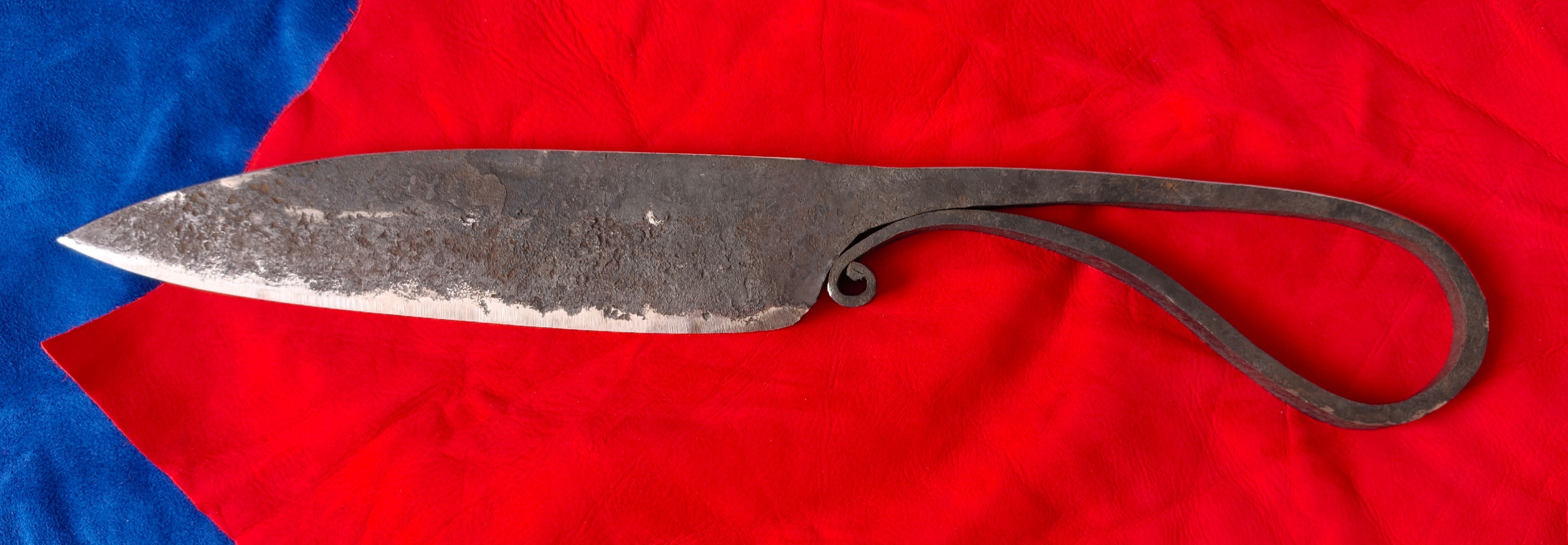
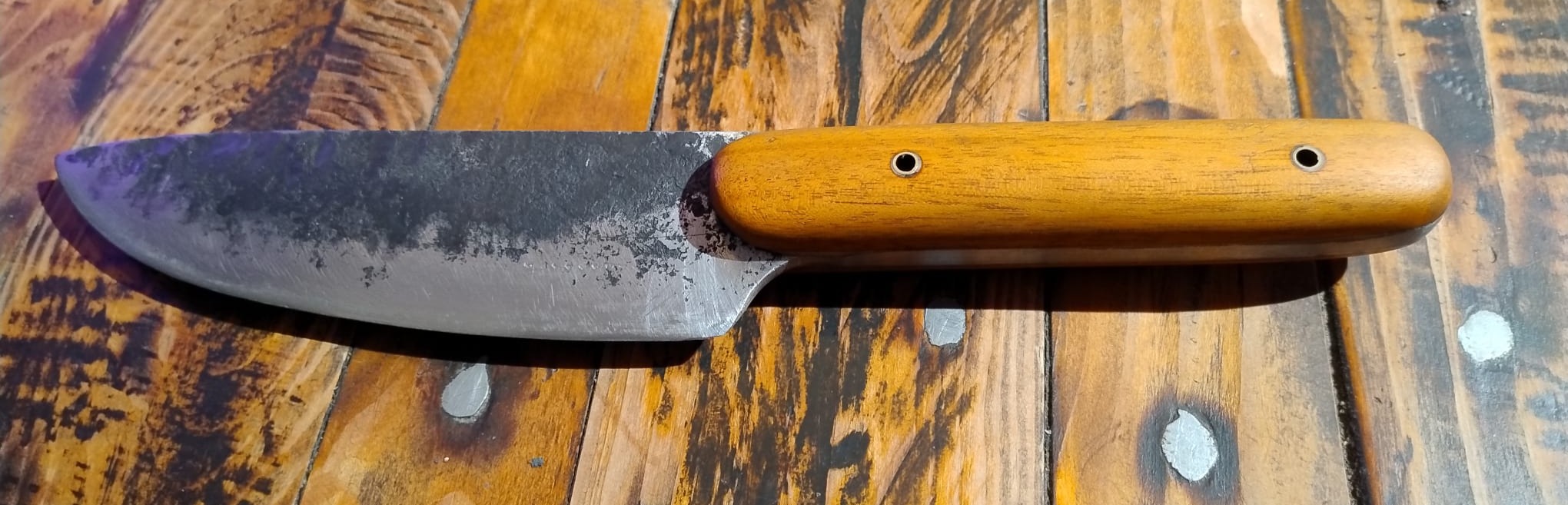
Finish the knife
There we were. At the final stretch of the journey, about to go home with a hand-forged and hand-filed iron knife of our own design. Having experienced the knife-making of old.
Nobody finished the blade. :)
I still had to continue forging almost the entire session. Everybody else was busy filing, drilling holes, and preparing wood for their handles. I had to make a damn long handle.
Back into the gas forge!
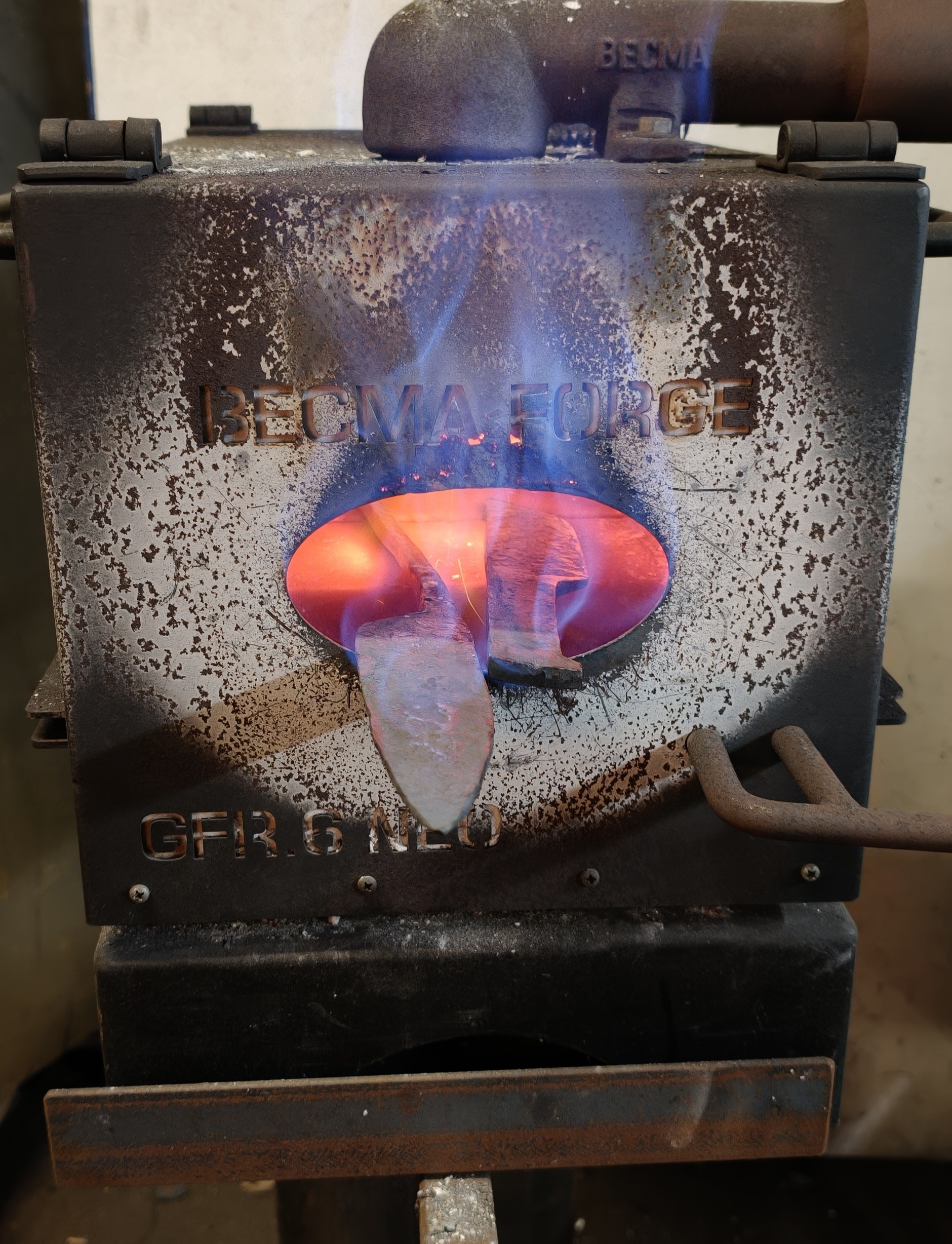
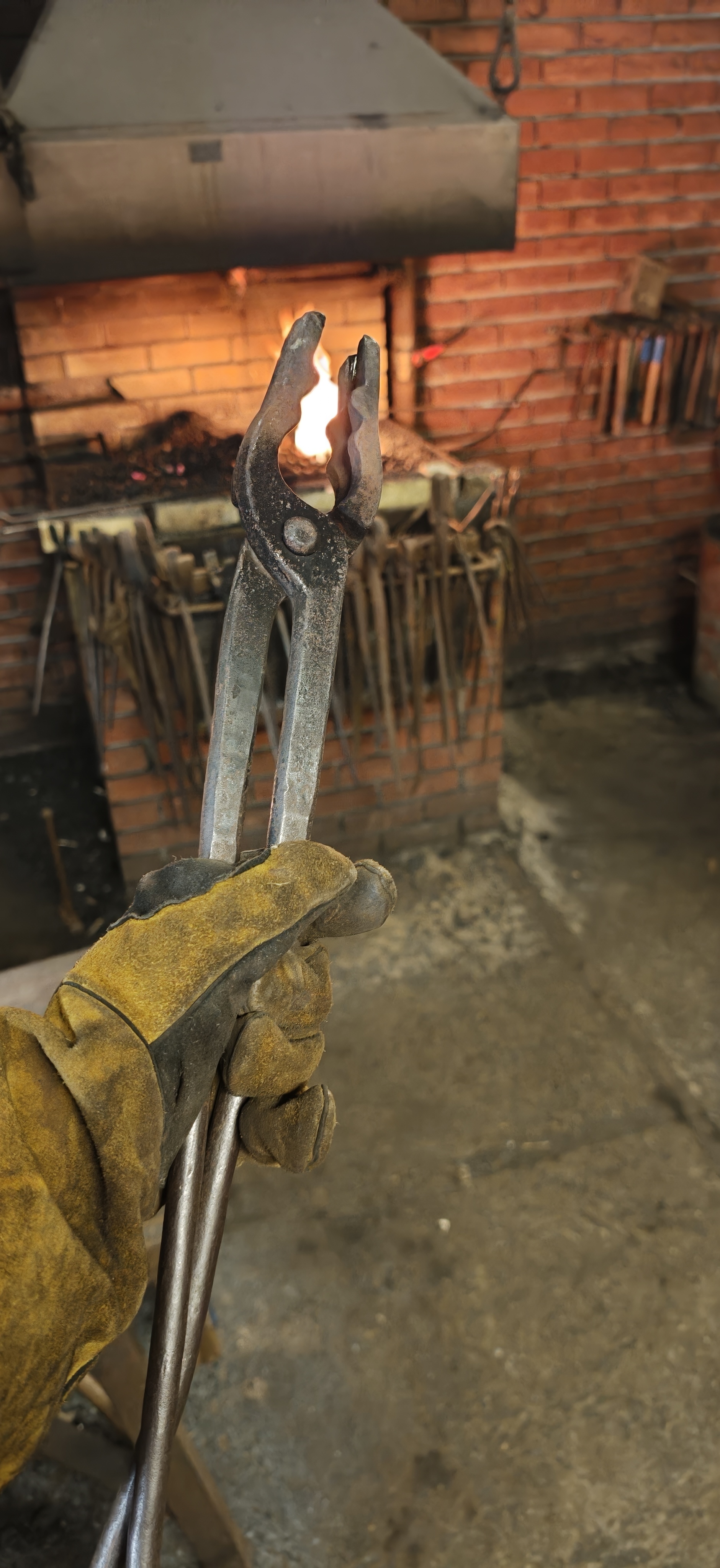
The tools
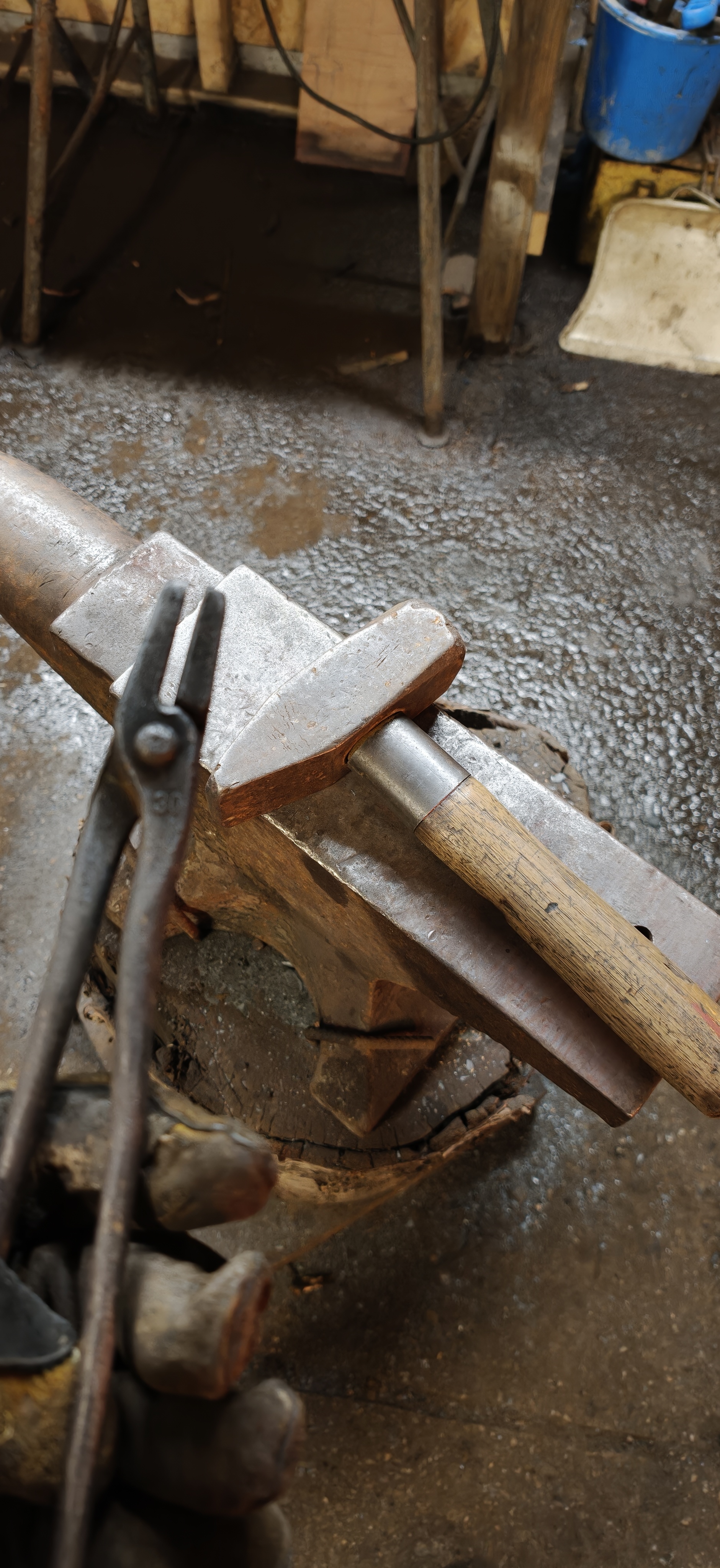
This was a new challenge, holding the knife by the blade side using tongs. Usually, your hammer arm gets tired, especially with bigger hammers. This time, I started feeling fatigue early on in my off hand—I had to use these specially-shaped tongs to grip the blade by the edges. The masters explained that holding it by the sides while hammering from the top runs the risk of the blade bouncing off into your face.
Similarly, when working from the side, I had to use the tongs with a smaller grip. So there was a bit of tool-shuffling around the anvil. Luckily enough, most guys were busy filing so the forges were available.
Make it long
First half of this session required heavy hammering again. By this point I had got the feel for the hammer weight and precision. I continued to thin out the handlebar tapering it into a point.
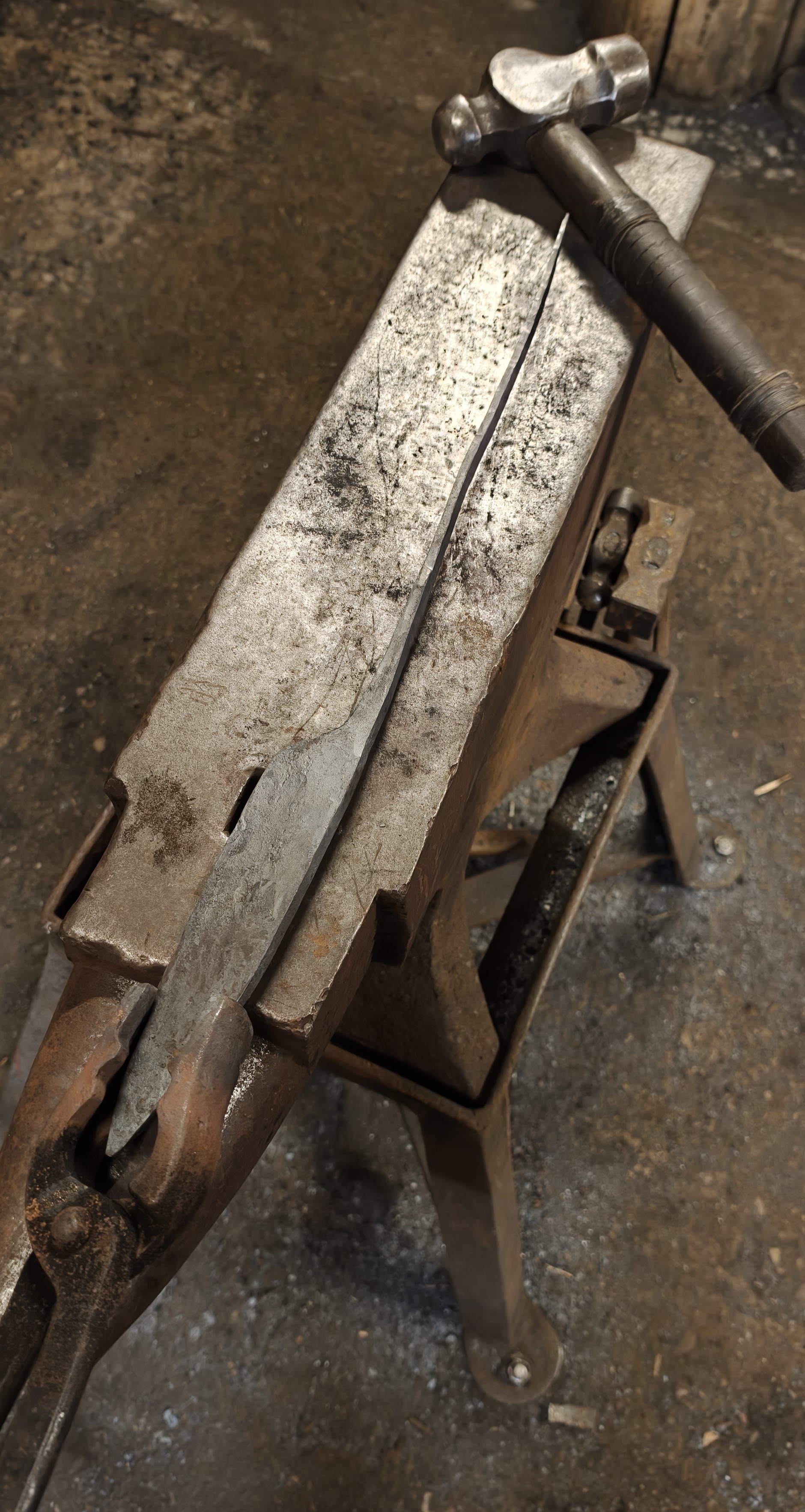
The masters showed me how to evaluate how long I must make the rod so I have enough material to curl. There was a trick where you lay out the knife at the edge of the anvil, envision the handle length, and then roll it back two and a half times on the anvil. And that's the length.
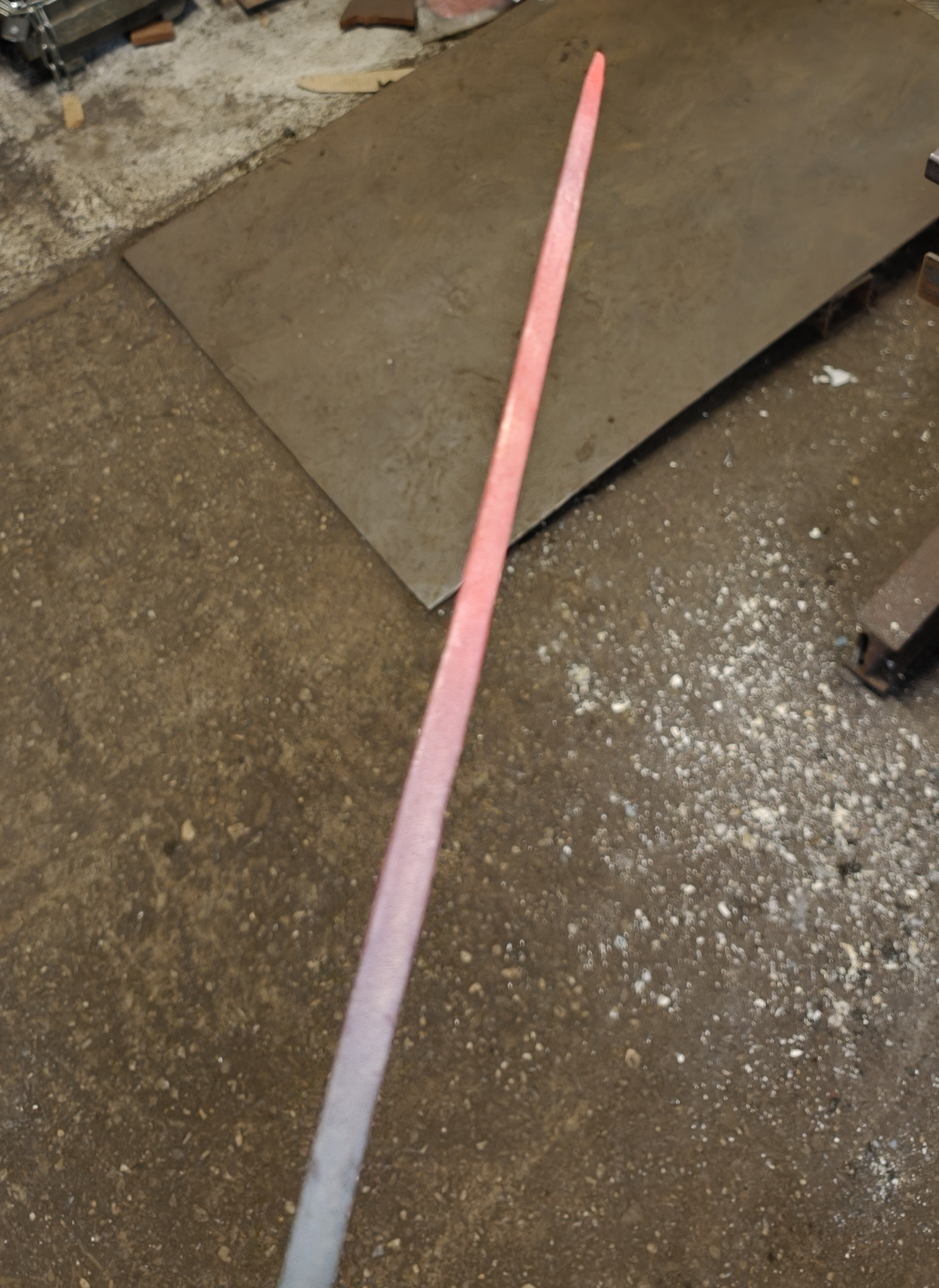
When I was satisfied with the shape, I cut about a centimeter off the end because the iron cracked from being heated up over and over again.
Then, it was time to make the curl.
Curl it
I was happy that I got to use the curling technique from the first session where we had to make the coat hanger. I only had to heat up a small section of the thin end of the rod, and was ecstatic that I could hold the knife by the blade—without tongs.
I hammered the rod over the edge of the anvil, and then top down like we practiced. I ended up with a little curl.
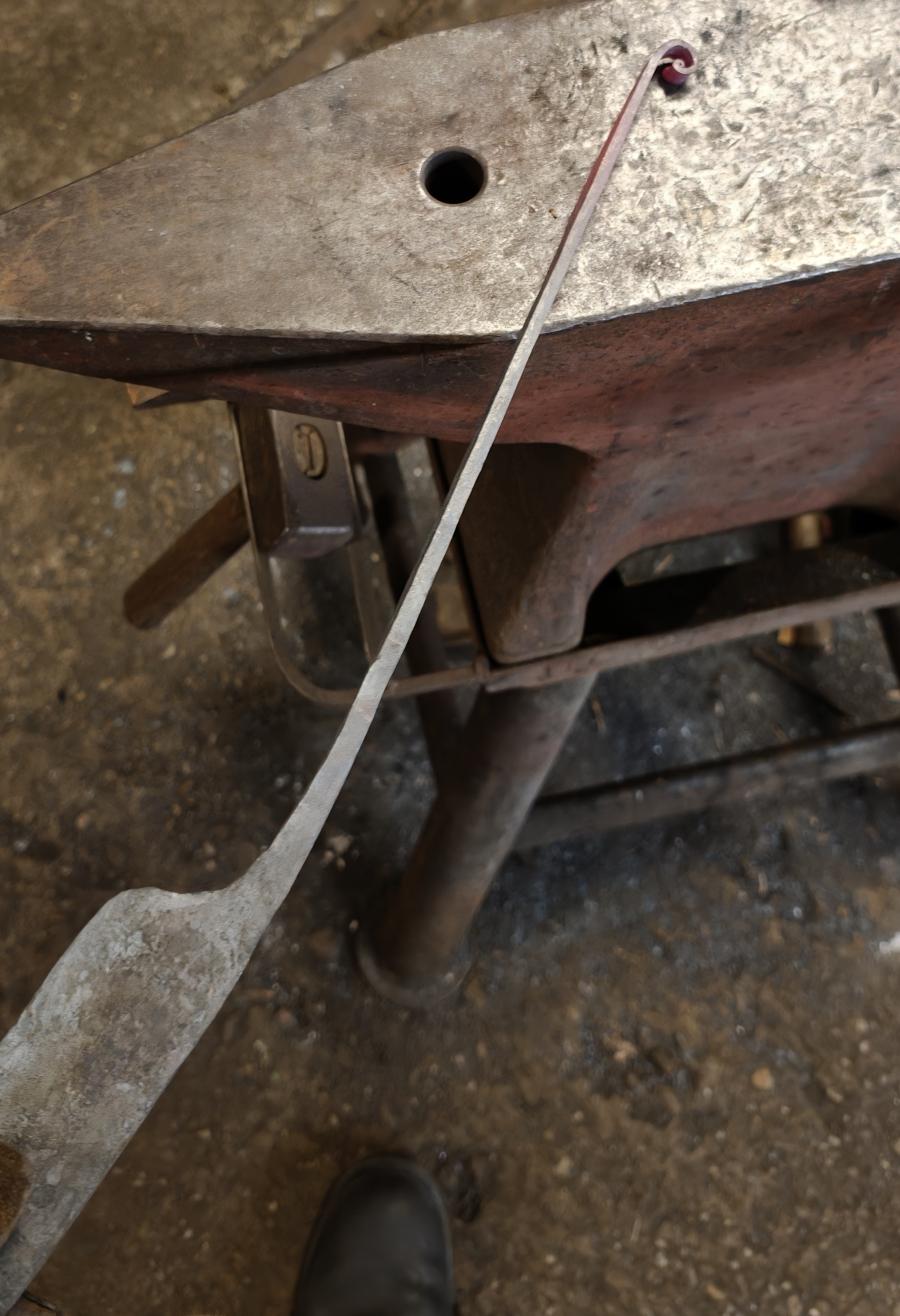
I wanted a little curl, not all the way closed up like the little coat hanger snail. When I was satisfied with its shape, I tried to make the rod as even as possible and rectangular at the cross section.
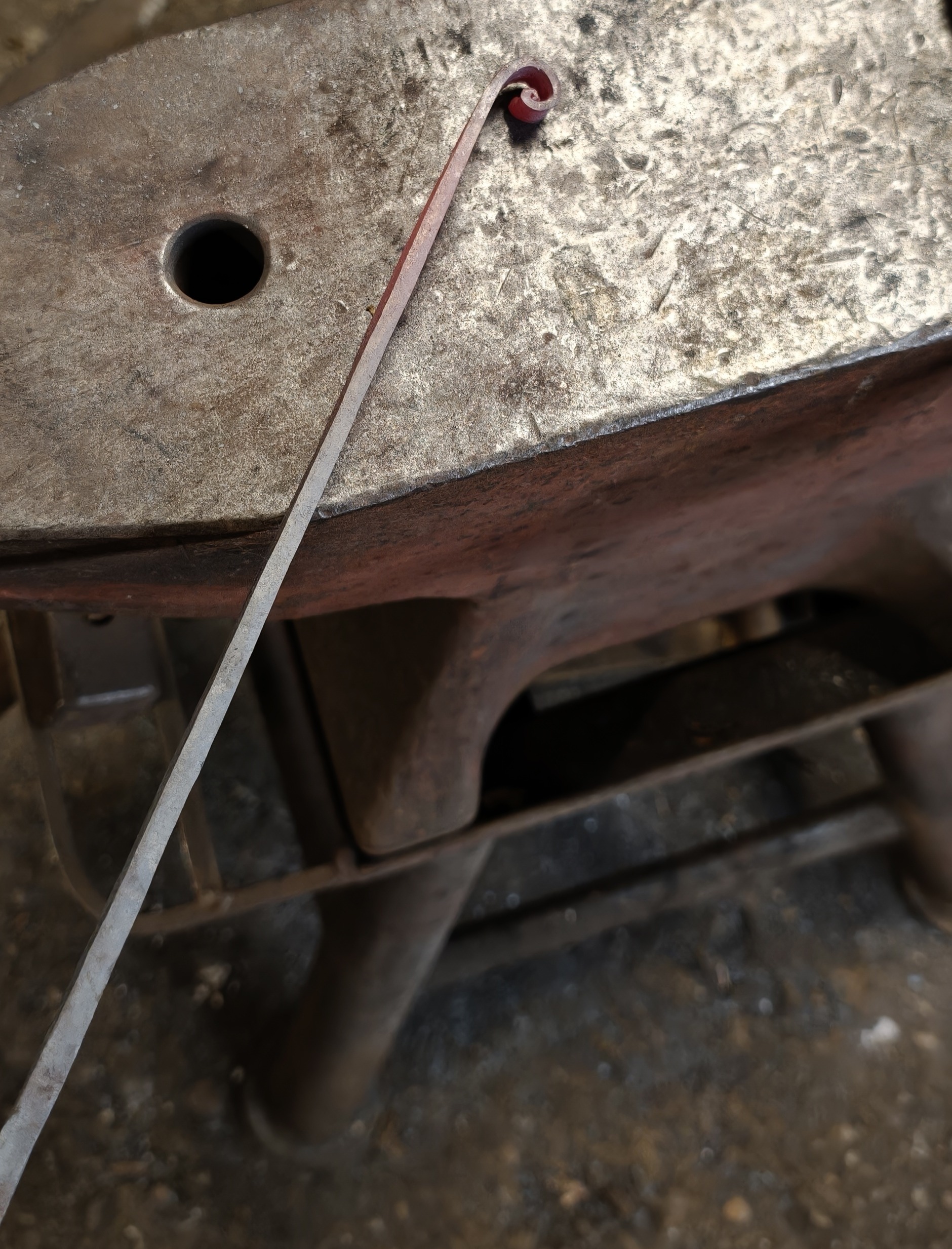
Then it was time to make the big curl. Unfortunately, I did not have time, or enough hands, to document this part with my phone. :)
But what I learnt quickly was—you need to make the small curves before you move on to the big one. You use the immaculate horn of the anvil to make both of the curls, but need to do the one closer to the end first, and then the final big one.
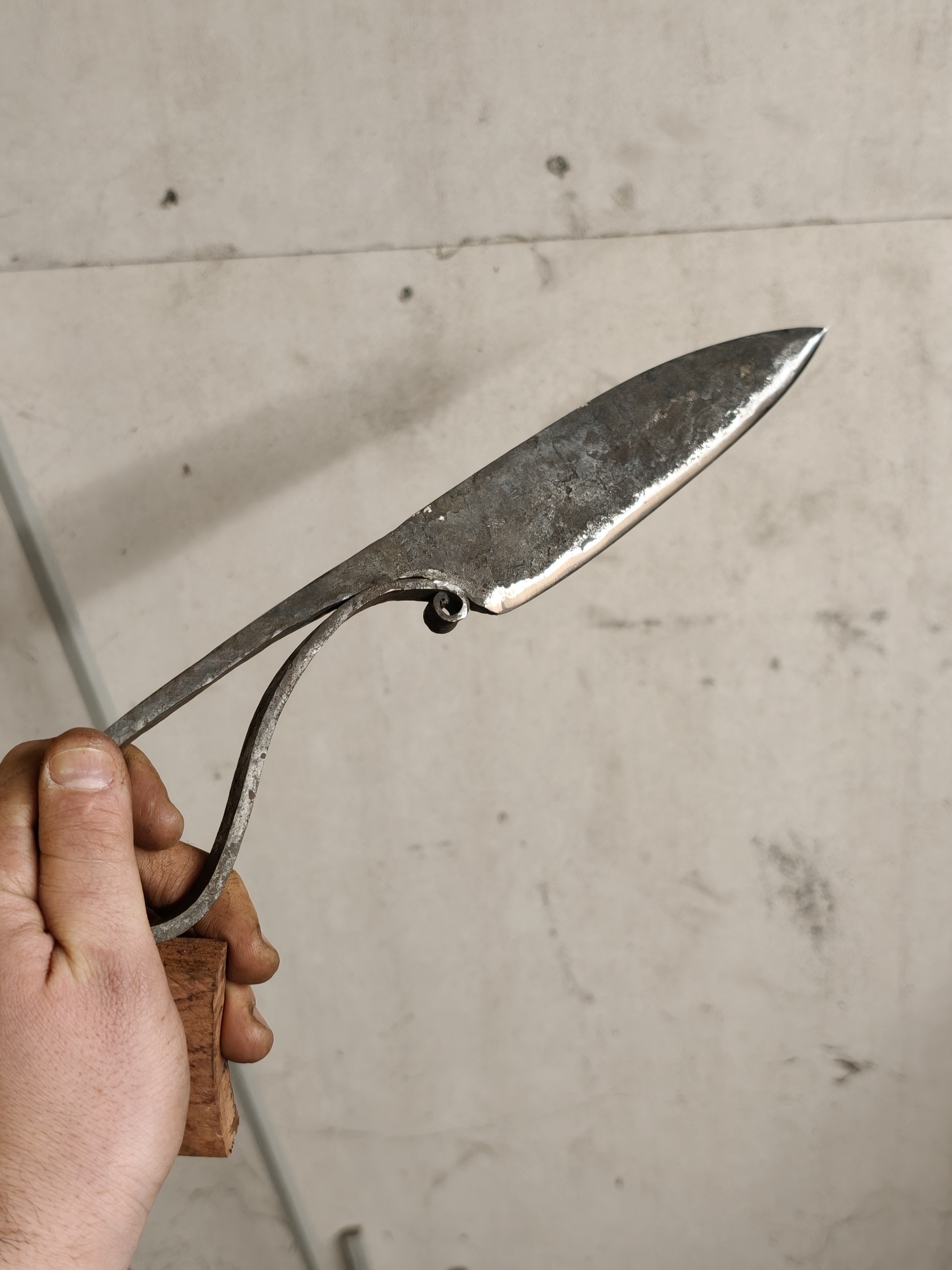
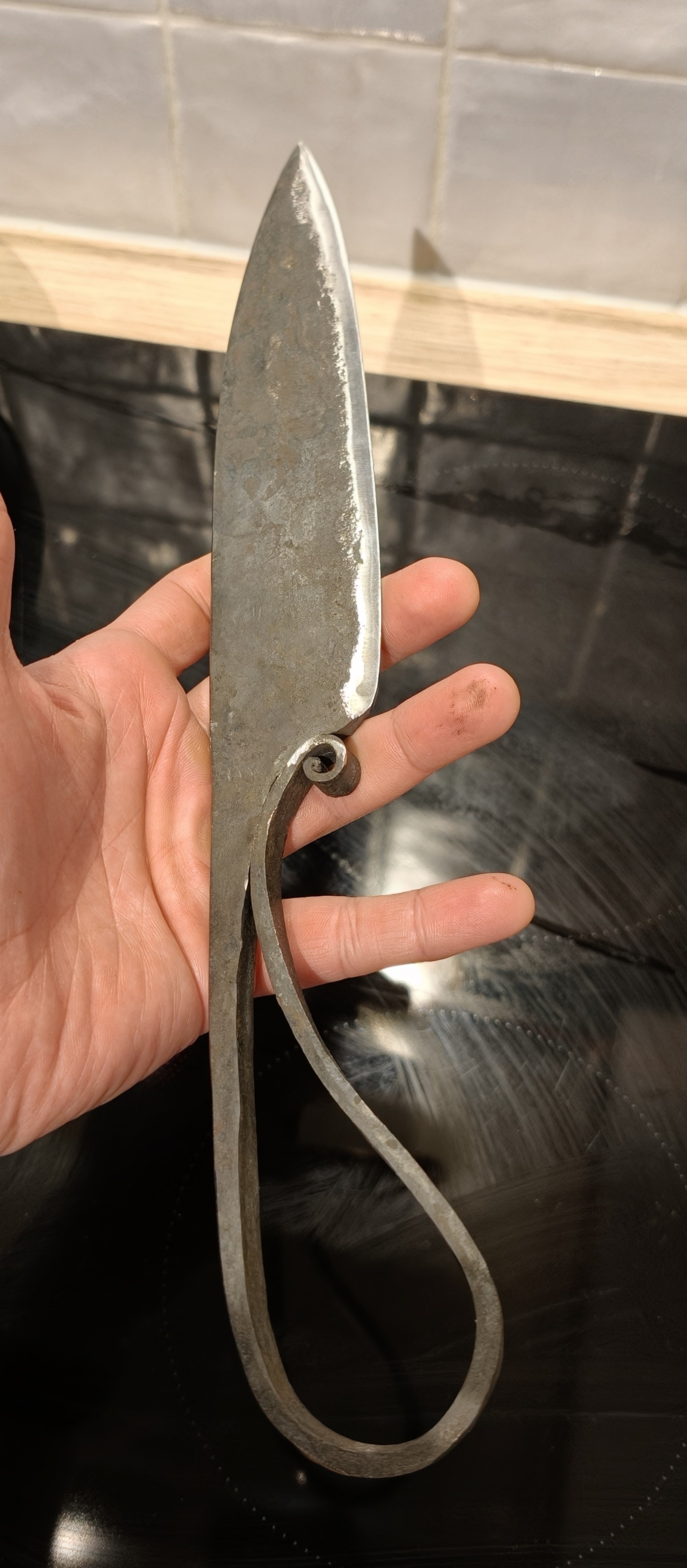
This took several heats, and of course, some fixing of the warps. The end result reminded me of the treble clef from music theory back in the school days.
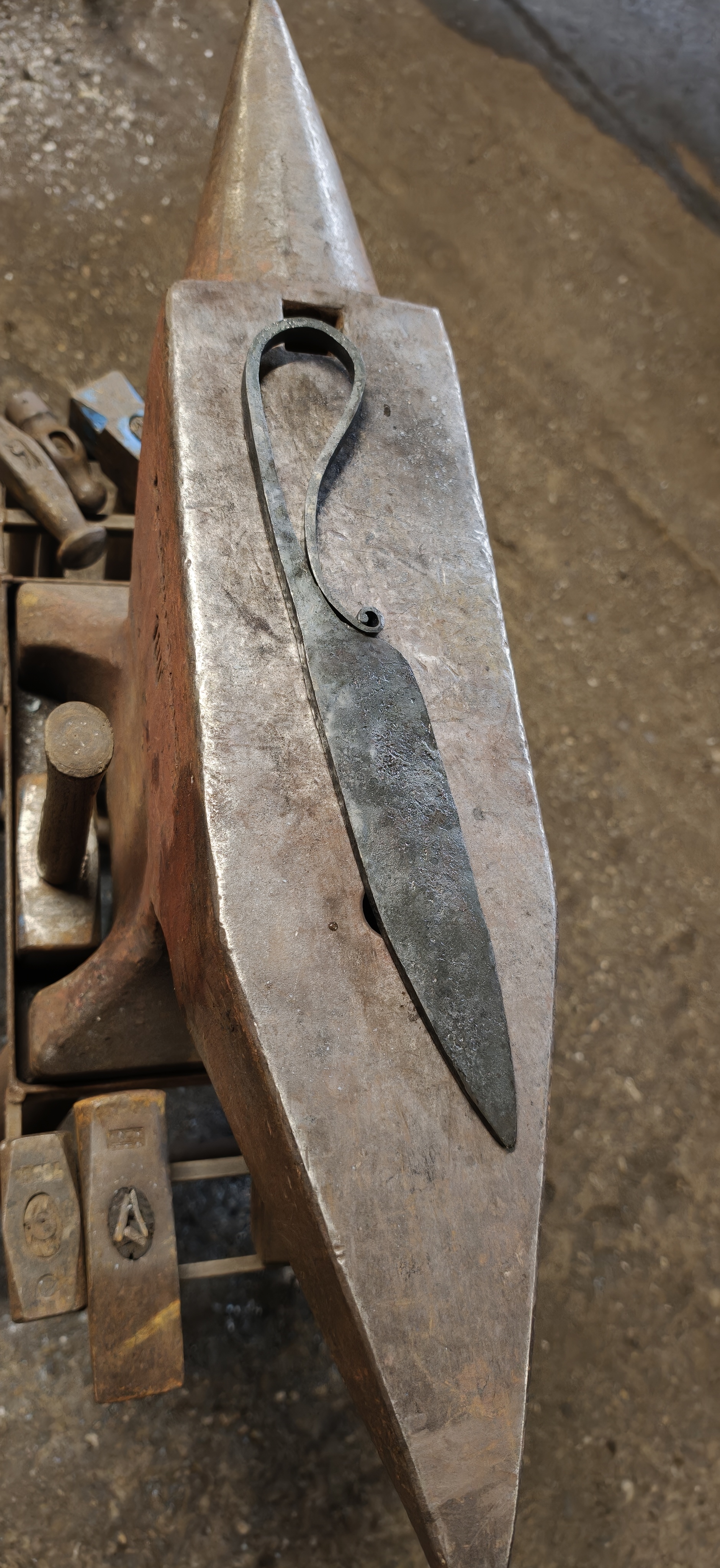
Forged blade
There we were. Almost at the end of our four sessions, three hours each. Forged the blade, looked like I wanted, had a forged bevel, and was straight-ish.
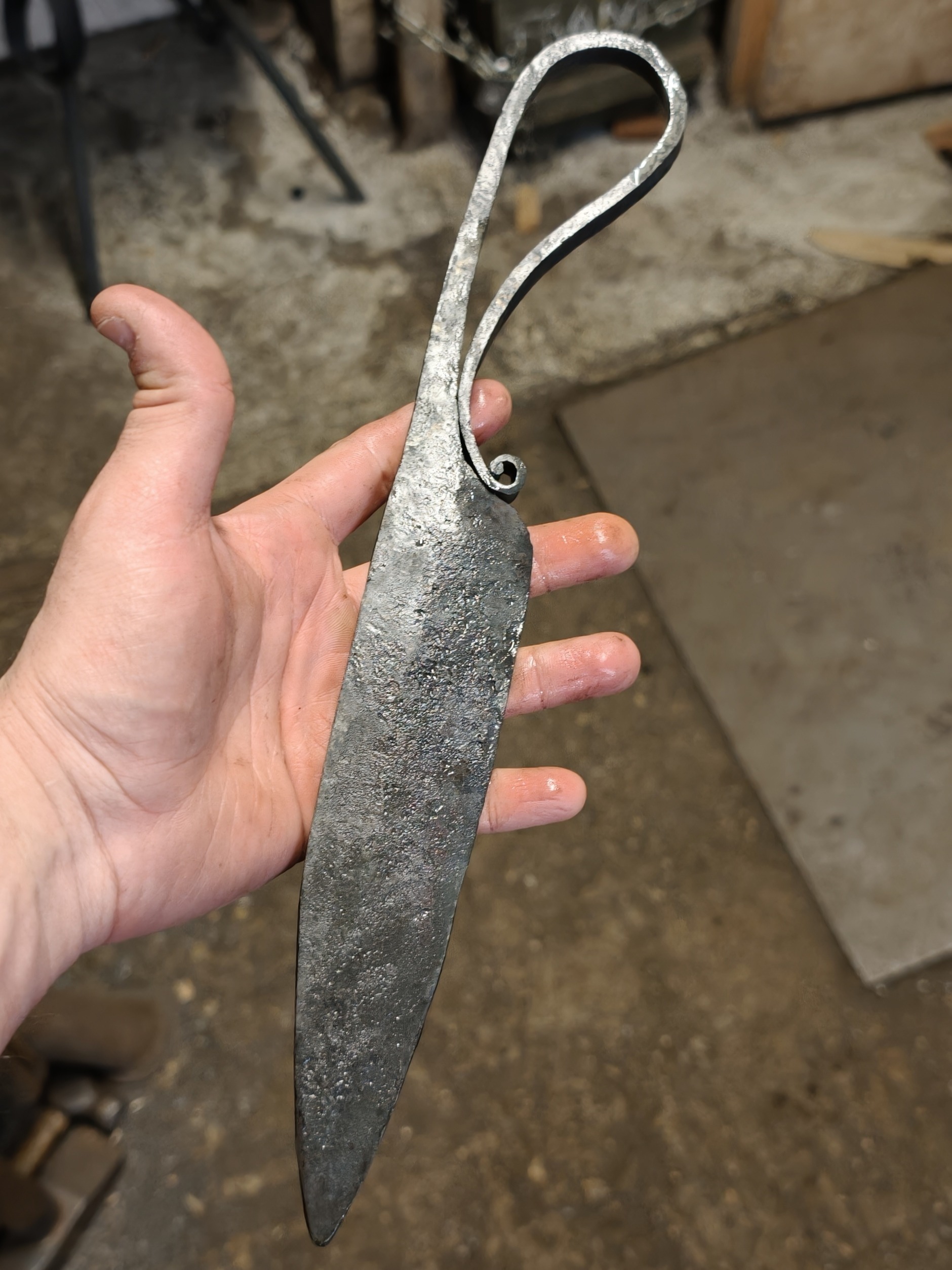
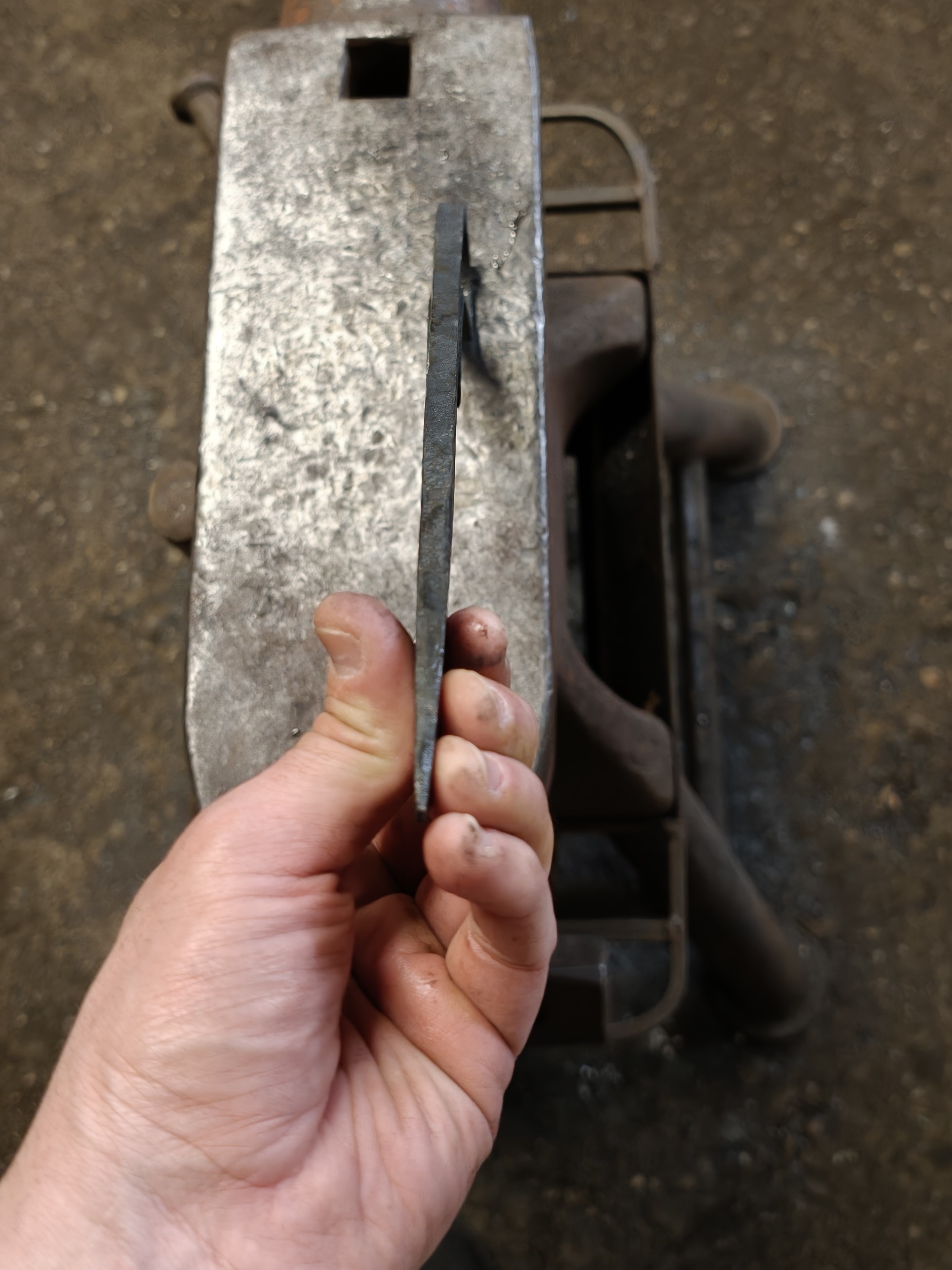
Like with everything, once you finish it—you know what you'd do differently next time. But I was happy with the end result. I only had about half an hour left to put an edge on it.
The masters let me cheat a bit and use the belt sander and an angle grinder. They were a bit scared at first but let me work alone after several timely warnings about overheating and protecting the tools as well as my fingers.
Outcome
As I said, nobody really finished their knife. Most of the other guys filed their knives down to a working edge, but the glue for the handles had not set yet. So everybody proudly took their unfinished project home to finalize at a later date.
Mine was mostly done—I had put an edge on it, but it was still about 2mm thick. It looked like a finished knife but I would have to perform some serious filing before actually sharpening it.
Learnings
Nothing specific I'd like to emphasize, really. Just plain, honest, manual workshop full of positive male camaraderie. Having dinner before each session and a beer after.
Talking the night away while we hammered, with an occasional lewd joke coming from every which way. Spending some quality time with a friend!
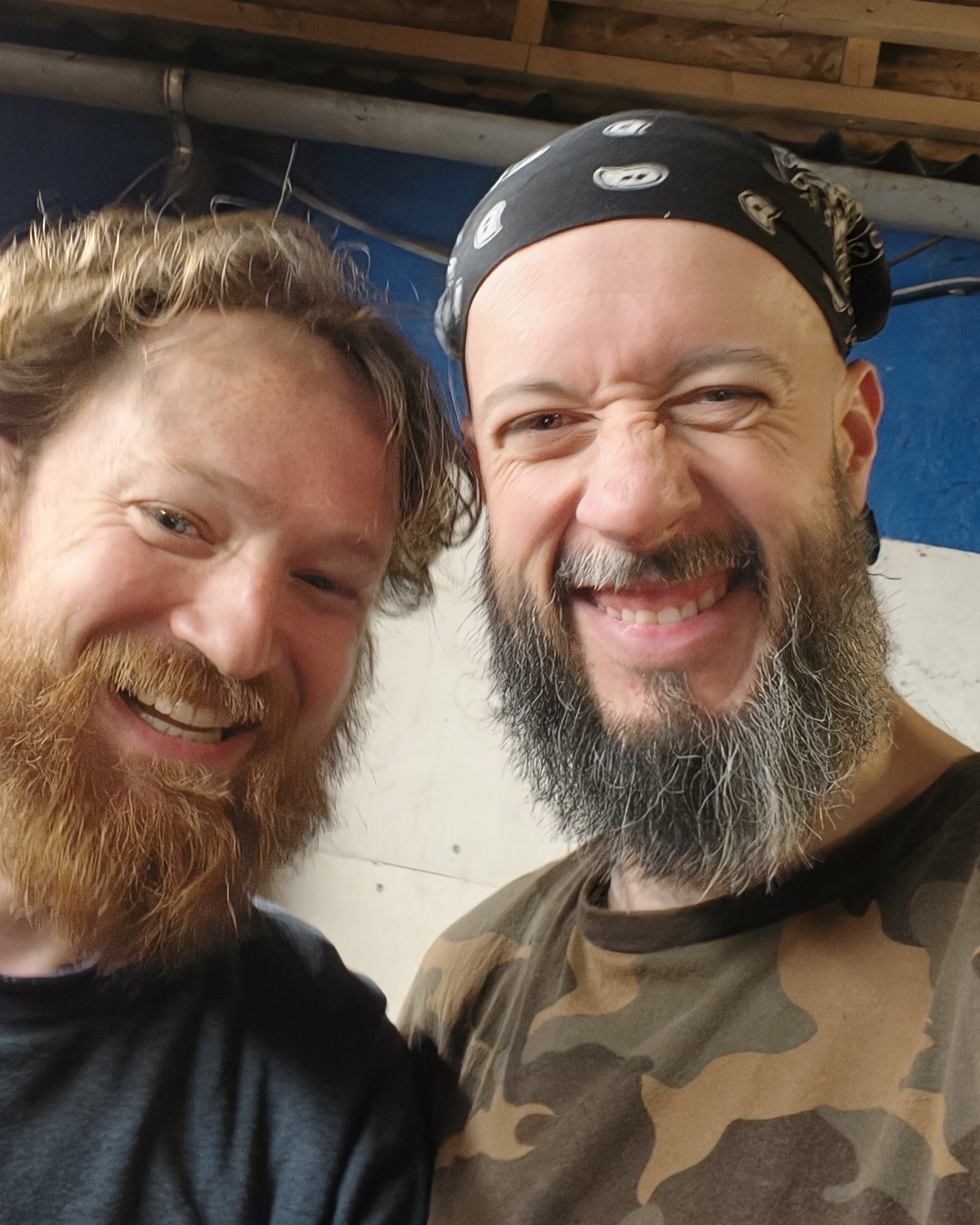
The knives also did not turn out that bad for a first ever forge!