Chest
My wife asked me to make her a jewelry box. Of course, I thought—what a great opportunity to weld something industrial looking. I asked her if that style was all right, and she agreed.
Idea
As I was happy with my coffee table, I decided to make a similar piece using steel L-profiles and oaken hardwood floor scrap.
Challenge
I remembered my old iron restoration project. This was also supposed to house my wife's jewelry, but ended up being too small for the many pieces her collection included. Bit by bit, I started increasing the dimensions. I think it ended up around 60x40x40cm in the end. Just a small jewelry box, right?
The approach would be similar to the coffee table:
- Weld the frame out of L-profiles.
- Fill in the sides with wooden planks.
- Invent a way to attach hinges and a lock.
- Aaah, yes, handles too!
Outcome
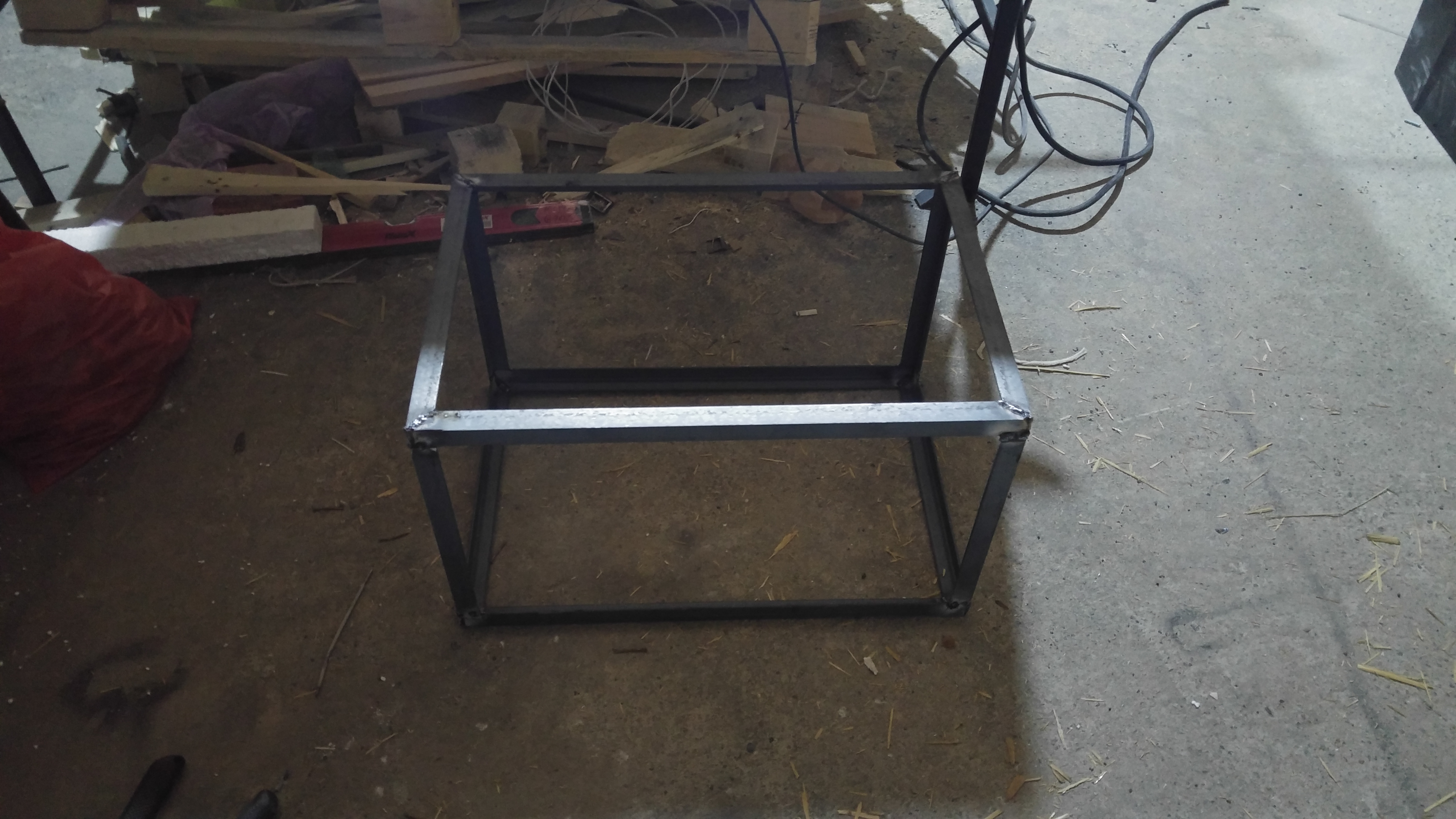
I tack-welded the profiles to construct the frame into which I would insert the wood. Of course, at that time, I still did not have a clear plan how to do that. Then I used the jig made previously to check that all the angles are at 90 degrees and made the welds.
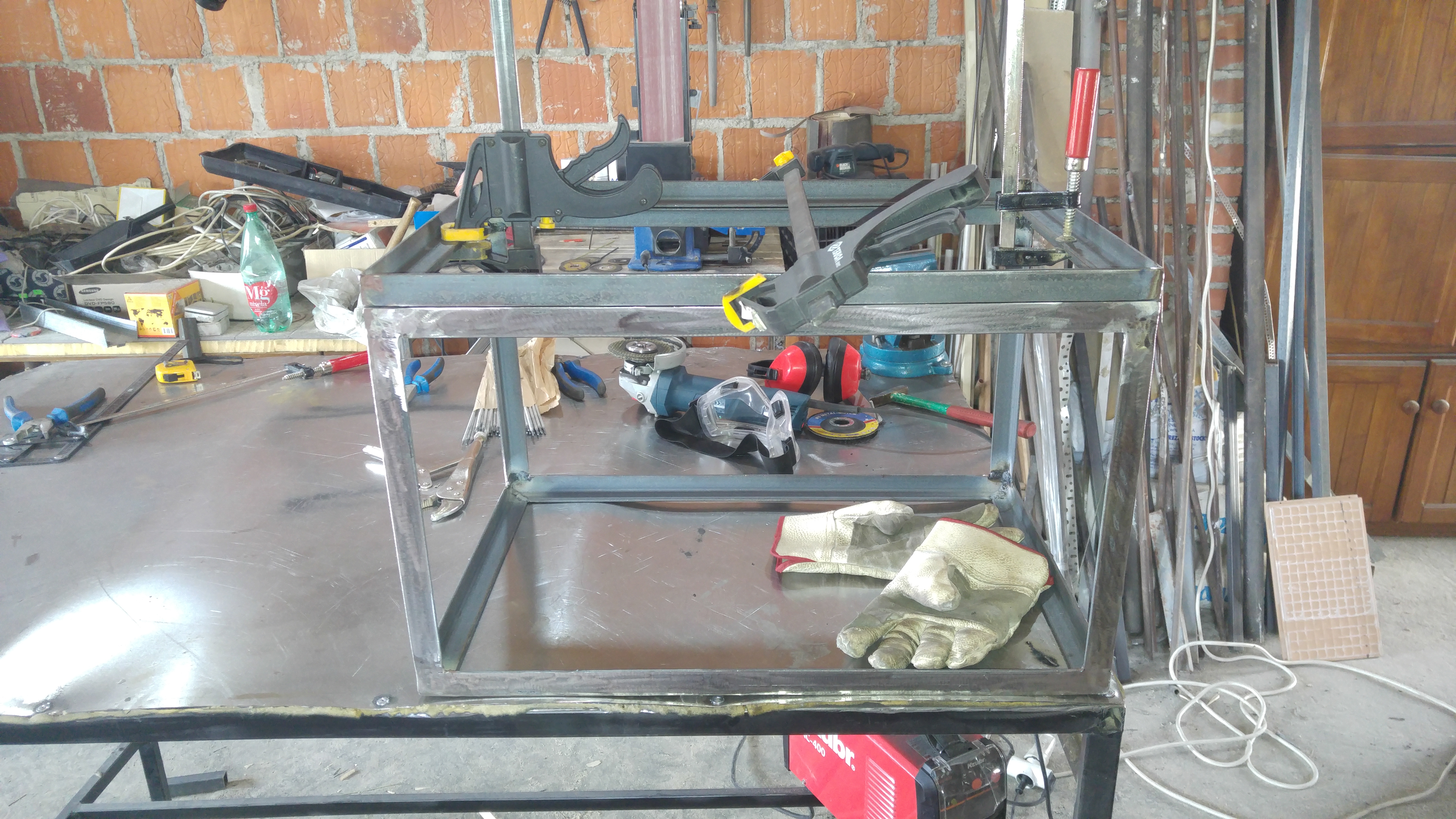
I then crafted the top part to allow the nice, oaken planks to be installed. I made sure everything was flush and would be able to open and close. But at that point, I gave up on the idea of making a sloping top part of the chest due to available materials and the added effort.
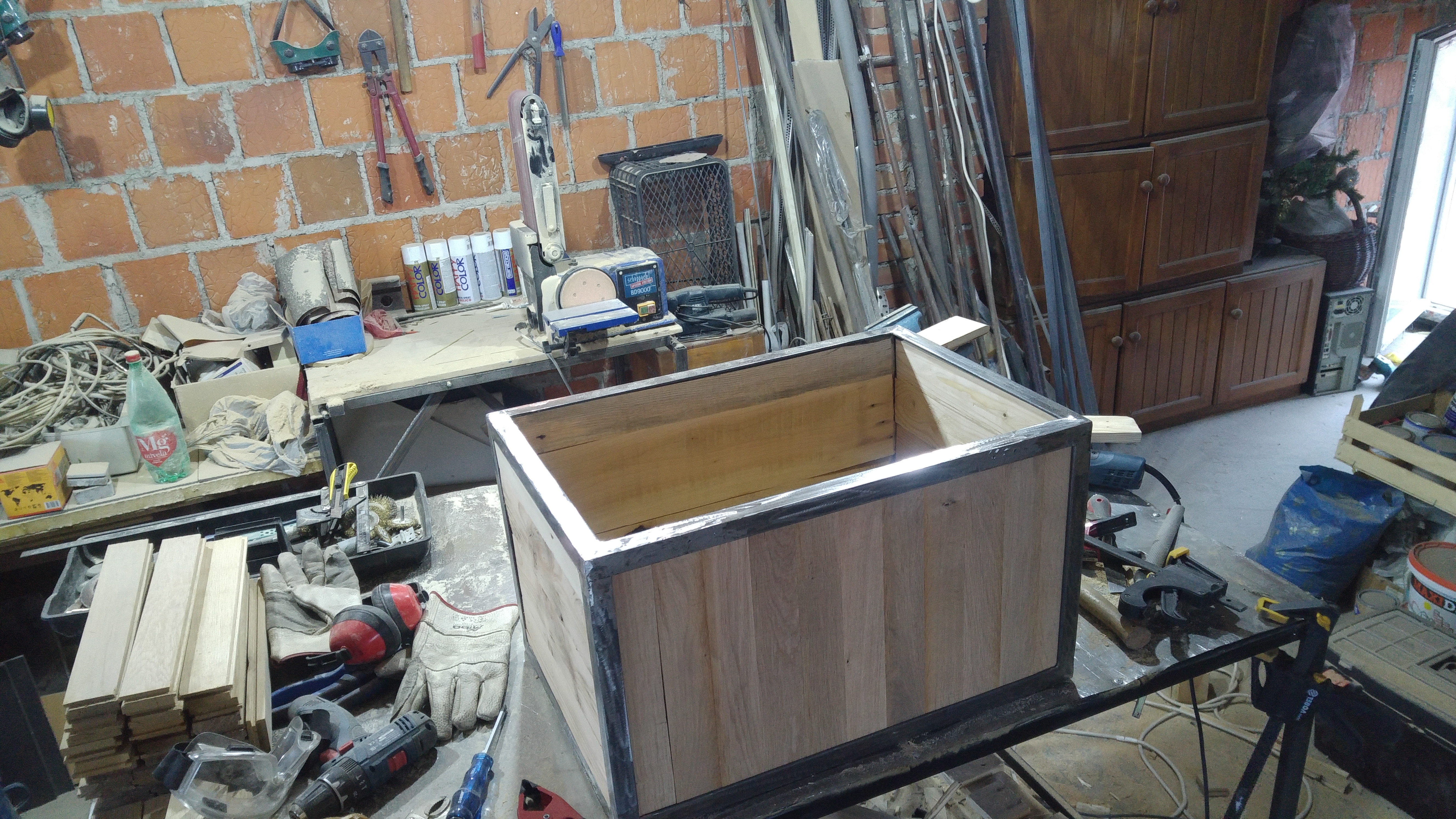
Another crucial deciding moment was when I realized that I had not had enough oaken planks for all 6 sides. So I used the oak for the top and the "front". The rest was filled with some old pallet wood that matched the color. It was tricky getting individual planks to join the next one and stay flush, so I did the side individually. I would measure the dimensions, make a glued wooden rectangle, sand it and cut it to size. Then I installed them with self-drilling screws from outside the frame.
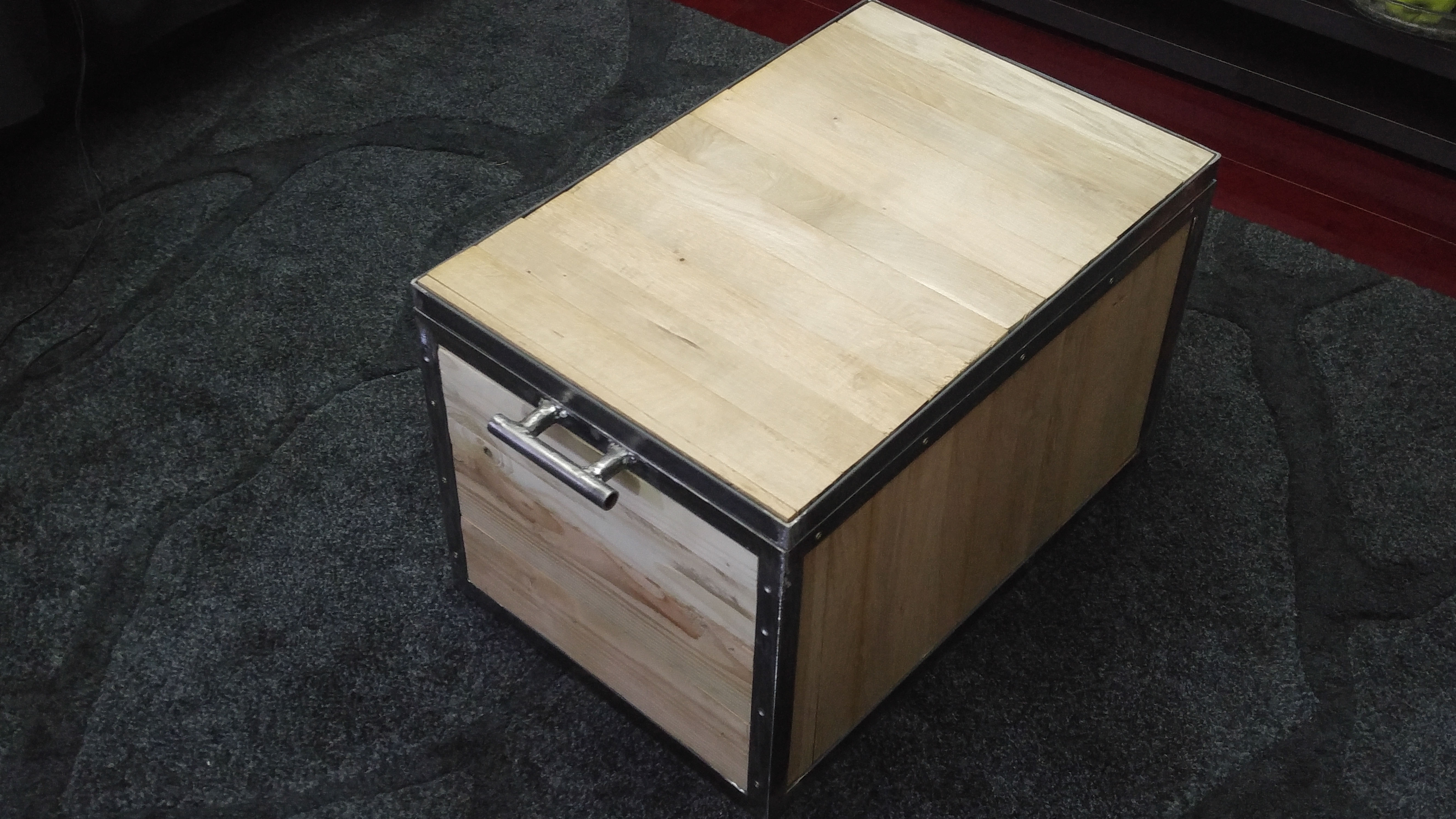
Once the top was filled, I realized that this would never be a jewelry box. :) It weighed dozens of kilograms. It was so heavy and hard to move around that I decided to weld on the handles after the fact. I found some old metal pipes, sanded them and welded them on. The hinges were on the back side, but at this point it was clear I had made another coffee table, albeit with some storage space.
Learnings
When I brought the huge chest into the house my wife and mom burst out laughing. :) It was evident that this heavy-duty furniture piece was not meant to hold rings, necklaces, and bracelets.
It did end up being used regularly to store some pillows for the garden and prop up coffee mugs. Sometimes, one should take the time to plan, design, and then gather the correct input materials instead of just reusing stuff.
This project taught me a lot about sanding wood though. I got some experience with the orbital and vibrating sanders, and also learned where and when to use the hand tools instead of rushing to machine everything.
Most of all, I learnt that woodworking requires a different type of patience that metalworking. With metalworking you need to be careful for your own sake, to prevent injury. But if you mess up, you just put a bit of a weld on and grind it out.
With woodworking, mistakes are more permanent. If your hand slips, you might need to use epoxy and saw dust, or glue in hardwood chunks and align the grain. So much more effort. So going slower is better, and for a hyperactive person such as I am—it required some time to be able to slow down but works wonders in the long run. Be sure to give woodworking a try. Not in the welding shop, though!