Coffee table
We moved into our new apartment. Had our first kid at the time, so time was short. After full-on renovations, we started equipping our new family abode with furniture. And amidst all the chaos, I noticed that my hand was reaching with a coffee mug for a place adjacent to the couch that did not exist.
It was time to get a coffee table.
Idea
My designs at the time relied heavily on thousands of Pinterests images I saved while late-night doom-scrolling. I knew I wanted it to be out of metal, but not completely because I did not want a rickety-rackety noise sounding off every time I put the mug down.
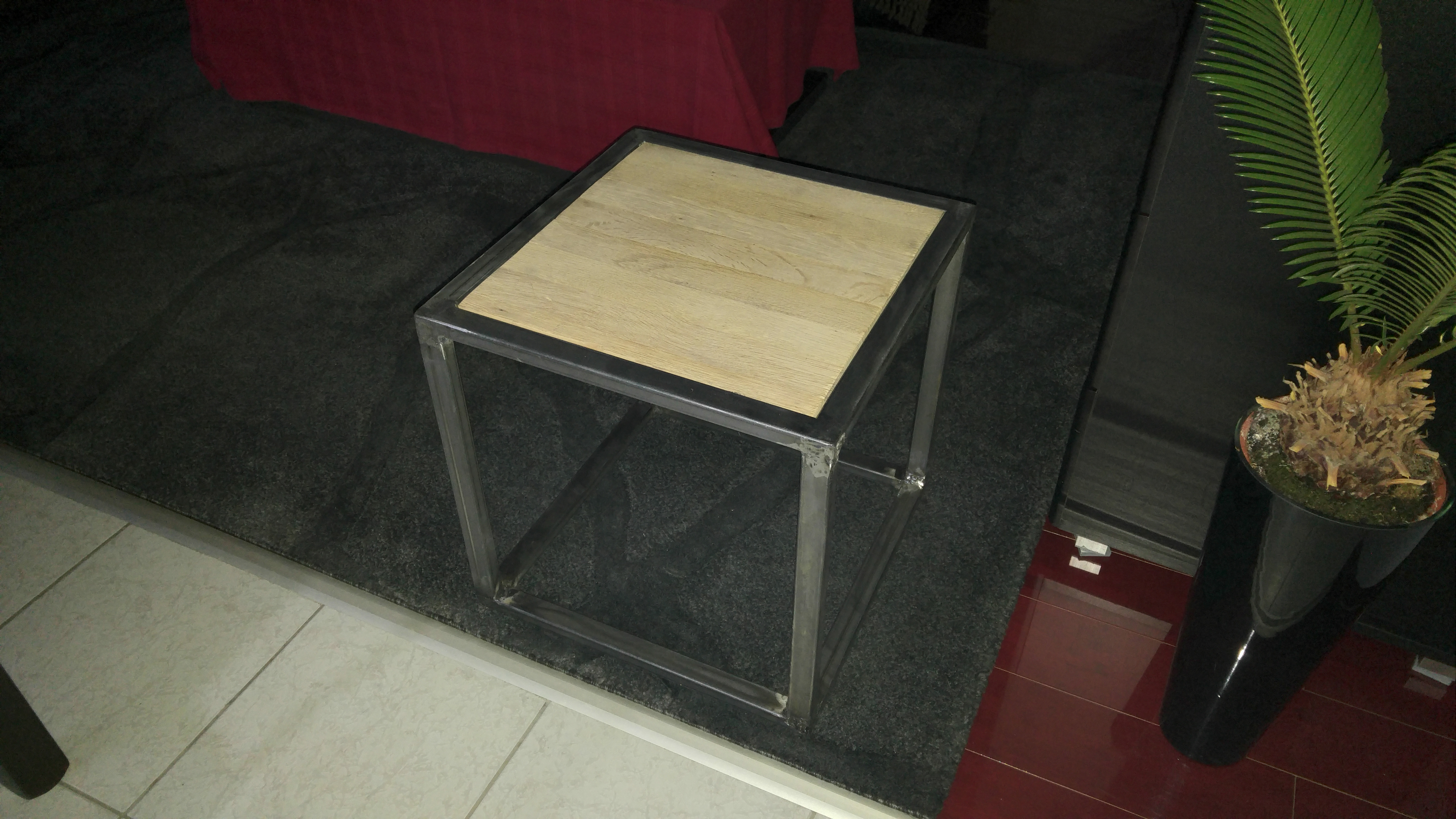
I found some leftover oak hardwood floor from the renovations, so I decided to use that as the top. And I kind of liked those little cube, welded coffee tables I saw online.
Challenge
Since I decided to weld a perfect cube, but had square pipes that were 2 by 3 centimeters at the cross-section, I had to plan a bit. After consulting YouTube, I decided to expose the 3cm thick side at the top and the bottom, and then simply make the vertical pipes parallel when looked from a side.
The task breakdown was:
- Make a jig to weld a metal cube.
- Deal with warps and the weld splatter.
- Make a wooden top, sand and protect the wood.
- Fix the top inside the cube.
Outcome
Wouldn't you know it, metal bends when heated! The pipes I used were industrial made and drawn out under a lot of pressure. These don't always have identical consistency across their length and when heated they twist and warp.
So I used some L-shaped profiles to first weld a jig that I could use as a template. Then I used metal clamps to fix the pipes into a perfect cube shape. I tack-welded the cube into place, and started working on my main structural welds, one by one. I realigned the structure after every warp with a hammer.
In the end I used an angle grinder to fix the welds so the metal does not protrude anywhere. Then used a wire brush to smooth it over, and decided to leave it unpainted. It retained the "industrial" look that the internet assured me everybody liked.
Finally, glued the hardwood floor pieces wogether and cut them to the exact shape of the top. Once it fit flush, I realized that I had no plan to actually attach the wood. I quickly cut two strips out of a metal sheet, sanded them, and drilled the holes. Then, I welded them on the bottom part of the top pipes so I can use the holes to attach the top with self-drilling screws. Once the top was perfectly level, I welded the strips and screwed it in from below.
Learnings
Out of all the projects I had made by that time, I thought that the coffee table was the most successful. It's still in use to this day. By then, I had already practiced welding a lot, so I used to joke that you could drop this table from the building and the welds would not budge.
The sanding and the transparent paintwork were also satisfactory, and there's still no rust to this day.
The biggest lesson from this project was that I could make my own jigs and welding setups to be reused for the following projects. Kind of how you see mostly custom-made tools all across blacksmithing workshops. And they did end up useful for the years to come.